
What does breech mean?
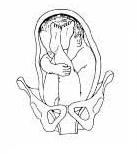
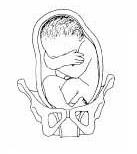
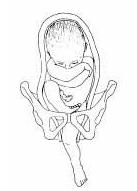
Breech means a baby's bottom or feet are closest to the birth canal, rather than the head. The drawings above illustrate three common positions: frank, complete and footling. The exact position can change, and only your care team can confirm yours (ACOG; RCOG).
Footling can mean one foot is lowest (single footling) or both feet are lowest (double footling). More rarely, one or both knees are lowest, called kneeling breech. Clinicians may use the word incomplete for some variations, but definitions differ, so ask what the description means in your scan (Norfolk and Norwich University Hospitals breech guidance).
How position can change
- Earlier in pregnancy: Babies move and change position. A breech position seen early can still change.
- By 36 to 37 weeks: RCOG says most babies have turned head-first.
- At full term: ACOG reports breech presentation in about 3 to 4 out of 100 full-term births. Ask your team when they will check your baby's position again.
Why might a baby be breech?
Often there is no clear reason. Factors associated with a baby remaining breech include more than one baby, unusually high or low amniotic fluid, a low-lying placenta, or differences in the shape of the uterus. A baby who is born early is also more likely to be breech. Rarely, breech can be associated with a condition affecting the baby, but most breech babies are otherwise healthy. Being breech is not something a parent caused by choosing the wrong posture (ACOG; RCOG).
How is the position checked?
A clinician may feel your abdomen to assess the baby's position and may use ultrasound or an examination to confirm it. Ask when your team plans to check again, especially if you were told about the position earlier in pregnancy. Movement and the location of kicks alone are not a substitute for a clinical assessment (ACOG).
What is ECV?
External cephalic version is an attempt by a trained clinician to turn the baby from the outside of the abdomen. It is often discussed after 36 weeks when a baby is still breech and the person's circumstances make it an option. The team checks the baby's heart rate before and after the attempt.
What happens at an ECV?
- 1Before: The team checks your baby's position and heartbeat. An ultrasound and medication to relax the uterus may be offered.
- 2During: A trained clinician applies pressure to your abdomen to try to turn the baby. It can be uncomfortable or painful; ask how discomfort is managed. You can ask the team to stop.
- 3After: The team checks the baby's heartbeat and whether the baby has turned, then discusses next steps with you. A baby can turn back after a successful attempt.
ECV is performed in a setting where cesarean birth can be provided promptly if needed. It is not an exercise to perform on yourself or have someone attempt at home. It is not appropriate for everyone. Recent bleeding, broken membranes, a placenta covering the cervix, some concerns about the baby's heartbeat, or a pregnancy with more than one baby can affect whether ECV is offered. Your team will assess your situation (ACOG guidance; RCOG).
How often does ECV work, and what are the risks?
RCOG estimates that ECV turns the baby head-down in about 1 in 2 attempts, although the chance varies with the pregnancy. A baby can turn back afterward. RCOG also estimates that about 1 in 200 people need an emergency cesarean immediately after ECV because of bleeding or a change in the baby's heartbeat. These group estimates cannot predict what will happen for an individual. Ask your team about your own likely benefits, risks and alternatives (RCOG).
ACOG lists possible ECV complications including changes in the baby's heart rate, the membranes breaking before labor, placental abruption (the placenta separating from the uterine wall), and preterm labor. Ask how the team monitors for complications and what it would do if one occurred (ACOG).
Can exercises or positions turn a breech baby?
Evidence at a glance
- Postures and exercises: There is not enough reliable evidence to recommend a particular posture as a way to turn a breech baby. A Cochrane review of six small trials found insufficient evidence for postural methods; its search was last updated in 2012 (Cochrane postural review).
- Moxibustion with usual care: A 2023 Cochrane review, which searched for studies through November 2021, found that it probably reduced the chance of a baby being breech at birth but probably made little or no difference to cesarean rates. Evidence about side effects was uncertain and harms were poorly reported (Cochrane moxibustion review).
The posture review looked at positions including knee-chest and lying with the pelvis raised. Insufficient evidence does not mean every movement is harmful, but it does mean these positions should not be treated as a dependable way to turn a baby or a substitute for a care-team discussion (RCOG).
General pregnancy activity and attempts to turn a baby are different questions. Many people with uncomplicated pregnancies can be active, but individual circumstances vary. Ask your clinician which activities fit your pregnancy, especially before trying a new or inverted position. ACOG lists warning signs to stop exercise and contact a clinician, including bleeding, dizziness, painful regular contractions, chest pain and fluid leaking (ACOG exercise guidance).
What about moxibustion?
Moxibustion is a practice that uses heat from a burning herb near the skin; it is not an exercise. Reported effects included burns, nausea and contractions. It is not a guarantee and does not replace prenatal care or ECV. If you are considering it, discuss your situation with your obstetric clinician and ask about appropriately trained practitioners rather than trying to treat yourself (Cochrane moxibustion review; RCOG).
What are the birth options if the baby stays breech?
The options depend on your pregnancy, preferences, the baby's position, and the experience and services available at your hospital. ACOG says many babies who remain breech are born by planned cesarean, while a planned vaginal birth of a single breech baby may be considered in some situations under hospital-specific guidance. Ask your team to explain the benefits and risks for you and your baby (ACOG patient guidance; ACOG term breech guidance).
Planned cesarean
A planned cesarean generally has a lower risk of certain serious complications for the baby than a planned vaginal breech birth. It is major surgery. Possible risks for the pregnant person include bleeding, infection, injury and anesthesia complications; a cesarean can also affect choices and risks in future pregnancies. Your clinician can discuss recovery and how your history changes the balance.
Planned vaginal breech birth
In carefully selected circumstances, some hospitals and experienced teams offer planned vaginal breech birth. Compared with planned cesarean, it avoids planned abdominal surgery but carries a small increased risk of the baby dying around birth or having serious short-term complications. These can include difficulty delivering the head or shoulders and the umbilical cord slipping down before the baby, which can reduce blood flow and oxygen. A plan may change to a cesarean if needed. Not every hospital offers vaginal breech birth (ACOG; RCOG).
Your baby's exact position matters. For example, RCOG says a team may advise against planned vaginal breech birth if one or both feet are below the bottom. Other findings and local expertise matter too; ask which options are appropriate for you.
If labor begins before term, if there is more than one baby, or if your circumstances change, the discussion may be different. Ask what the plan is if labor starts or your water breaks before a scheduled visit or birth.
After birth: breech and baby's hips
Developmental dysplasia of the hip (DDH) means the hip joint has not developed or fitted together as expected. The ball at the top of the thighbone may sit in a shallow socket, be loose, or move partly or fully out of the socket. DDH is a spectrum; the picture below shows examples, not a way to diagnose your baby (AAOS hip dysplasia guidance).
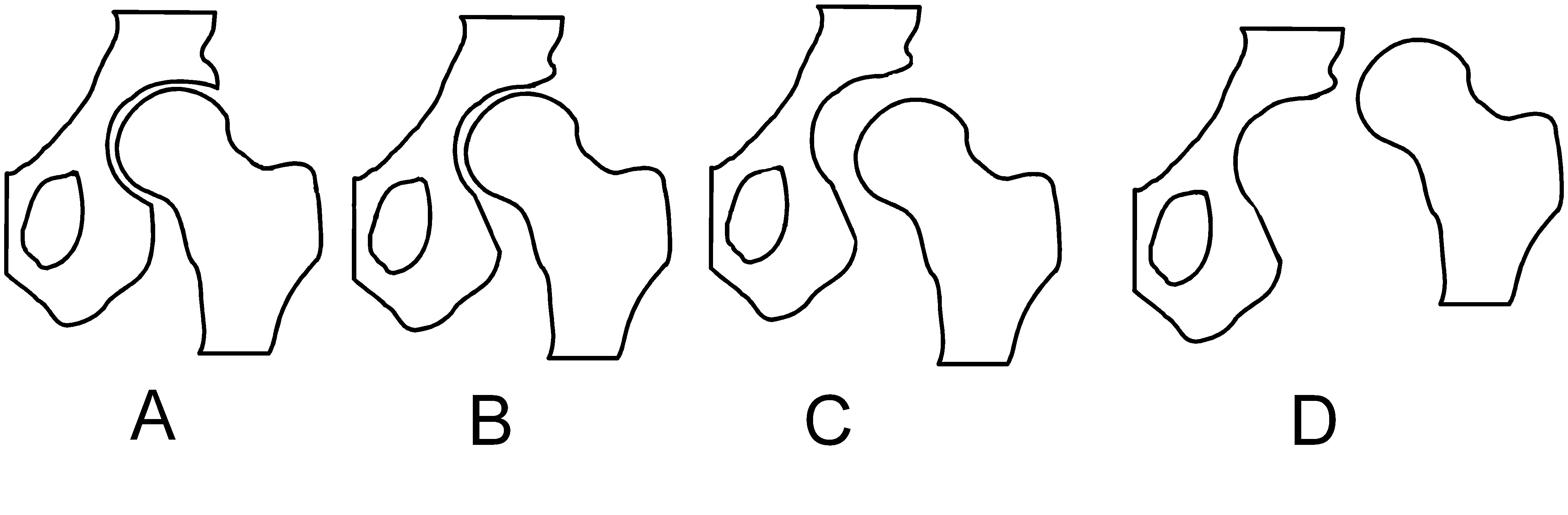
- A
- Typical fit
- B
- Shallow socket
- C
- Partly displaced
- D
- Dislocated
Why does breech matter?
Breech is a risk factor, not a diagnosis. Most babies who were breech do not have DDH. Tell your baby's clinician if your baby was breech in the third trimester, even if the baby turned before birth. The AAP's guidance treats third-trimester breech as a risk factor regardless of sex or whether birth was vaginal or by cesarean (AAP clinical report; AAP explanation).
What checks or scans might my baby need?
- 1After birth: Your baby's clinician checks the hips. Tell them if your baby was breech during the third trimester, even if the baby turned.
- 2At well-child visits: Your baby's clinician continues checking the hips. A normal newborn exam is reassuring, but it does not replace later checks.
- 3Discuss imaging: For a baby with risk factors and a normal exam, the AAP says an ultrasound can be considered from about 6 weeks to 6 months; a pelvic X-ray may be considered after 4 months. The AAOS supports imaging before 6 months for infants with breech or certain other risk factors. Timing depends on the exam and your baby's circumstances (AAP clinical report; AAOS hip dysplasia guidance).
If an exam is abnormal or you are concerned, contact your baby's clinician promptly rather than waiting for a routine scan. They may arrange earlier evaluation or a pediatric orthopedic referral (AAP HealthyChildren; AAP clinical report).
Are there signs at home?
DDH often has no obvious signs in a young baby. Mention a leg that seems harder to move outward, a difference in leg lengths, or uneven thigh or buttock creases to your pediatrician. These findings do not by themselves diagnose DDH, and their absence does not rule it out. Do not try to test or force the hips yourself (AAP HealthyChildren).
What if DDH is found?
Some mild early findings are watched and resolve without treatment. Other babies may be referred to a pediatric orthopedic specialist. Depending on the baby's age and hip findings, treatment can include a soft harness or brace; a cast or surgery is sometimes needed. The specialist makes the plan and checks progress (AAOS hip dysplasia guidance; NHS hip dysplasia information).
Hip-friendly swaddling and safe sleep
If you choose to swaddle, leave room for your baby's hips and knees to bend up and out; do not wrap the legs straight and tightly together. Put your baby on their back for every sleep on a firm, flat surface. Stop swaddling as soon as your baby shows signs of trying to roll. If your baby has a harness, follow the specialist's instructions (AAP swaddling guidance).
Questions to bring
- What position is my baby in, how was it confirmed, and when will it be checked again?
- Is ECV an option for me? What are my individual chances, possible discomforts and risks?
- Where would ECV take place, what monitoring is used, and what happens if I want to stop?
- What are the benefits and risks of the birth options available at this hospital?
- Does this hospital have a team experienced in vaginal breech birth, and would I be eligible to discuss it?
- What should I do if labor starts, my water breaks, I have bleeding or my baby's movement changes?
- Which activities fit my pregnancy, and what should I know about claims that positions turn a baby?
- My baby was breech in the third trimester. Should we arrange a hip ultrasound or other follow-up, even if the newborn exam is normal or the baby turns?